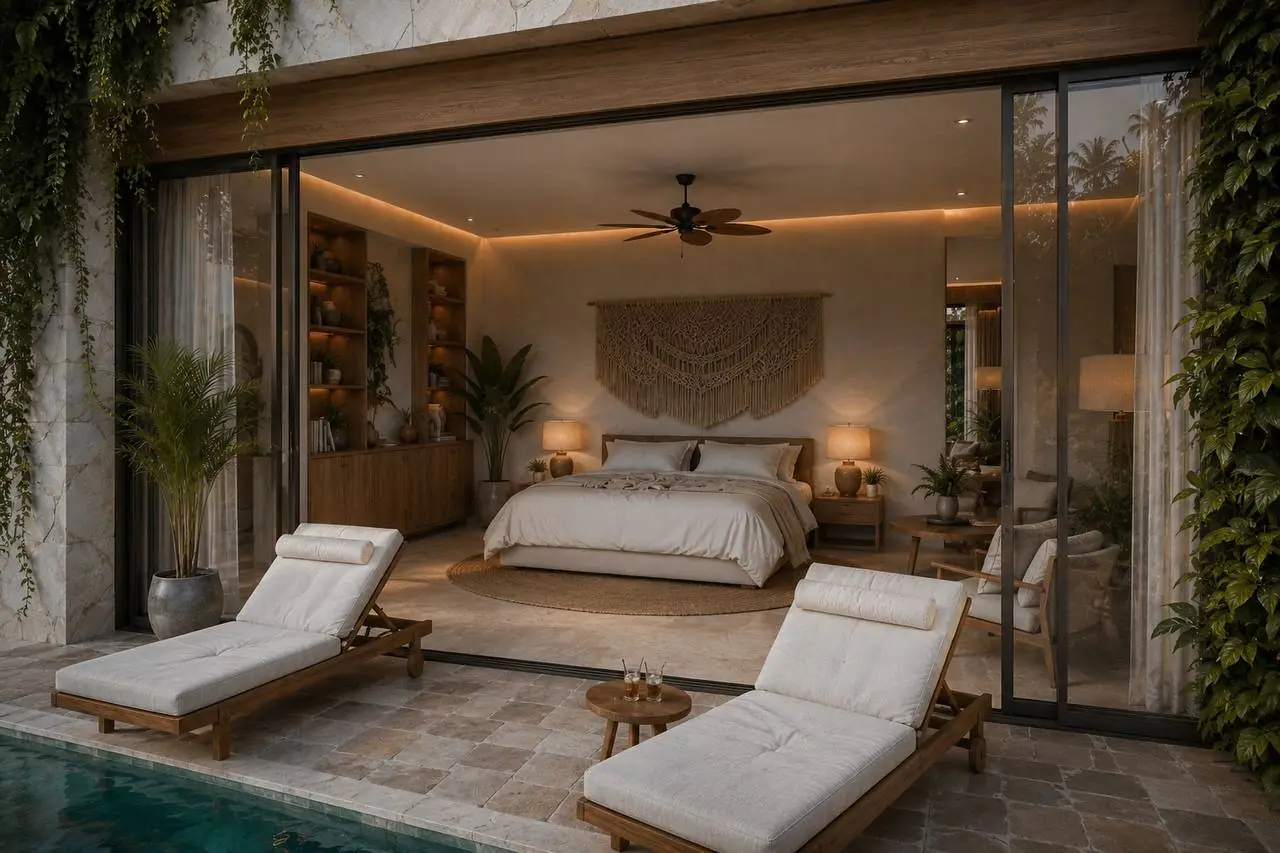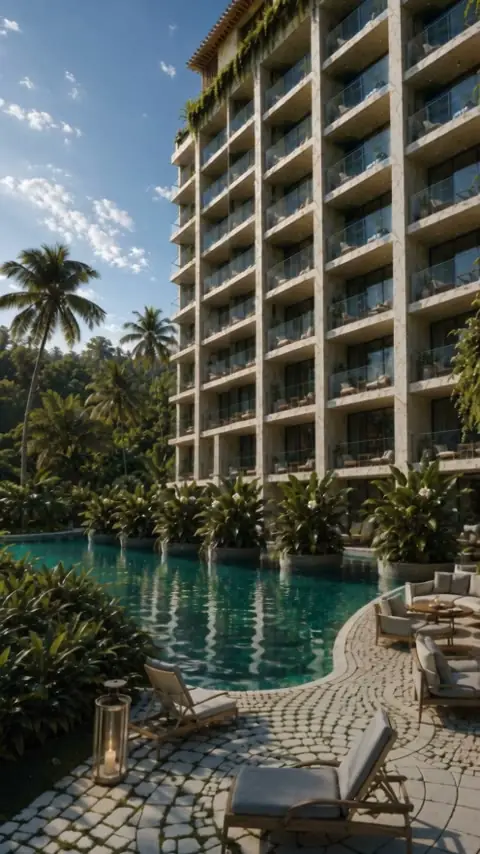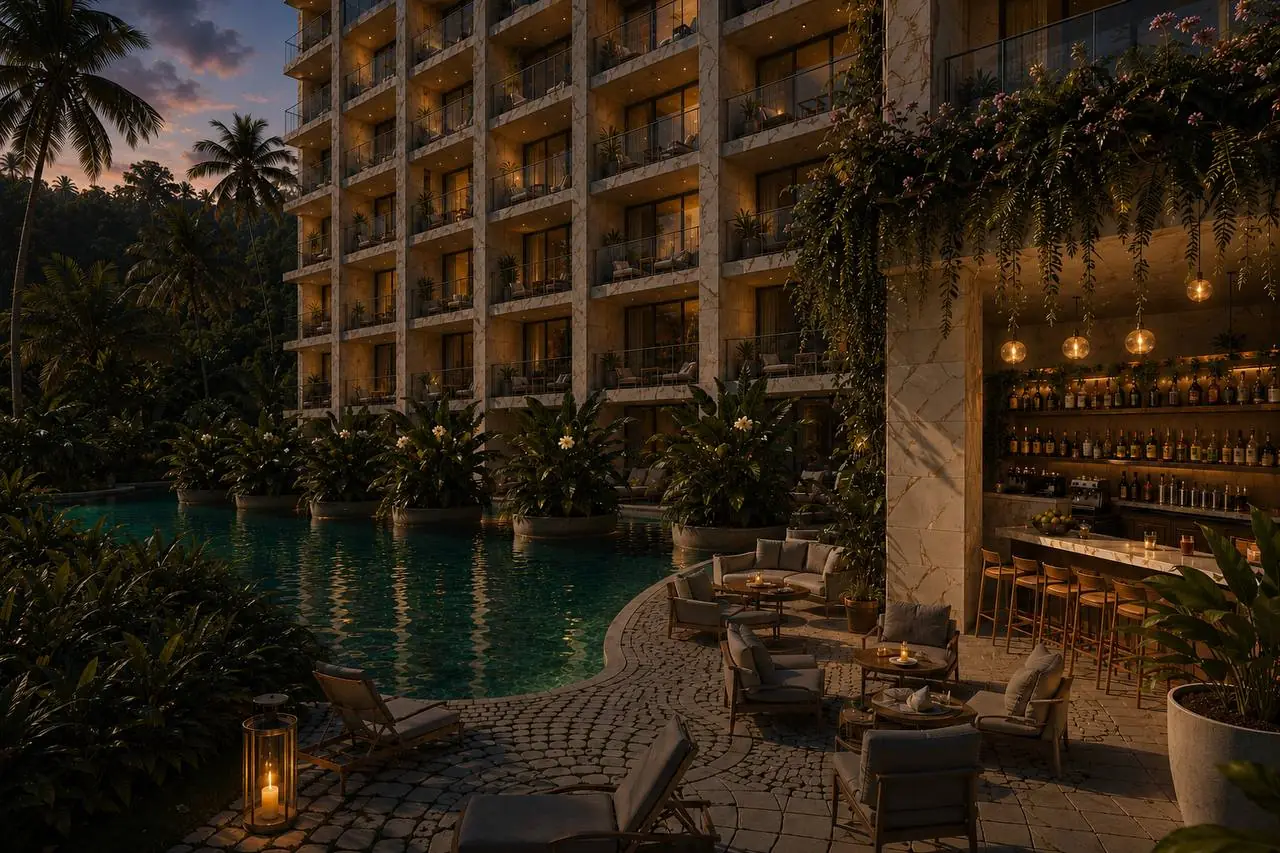
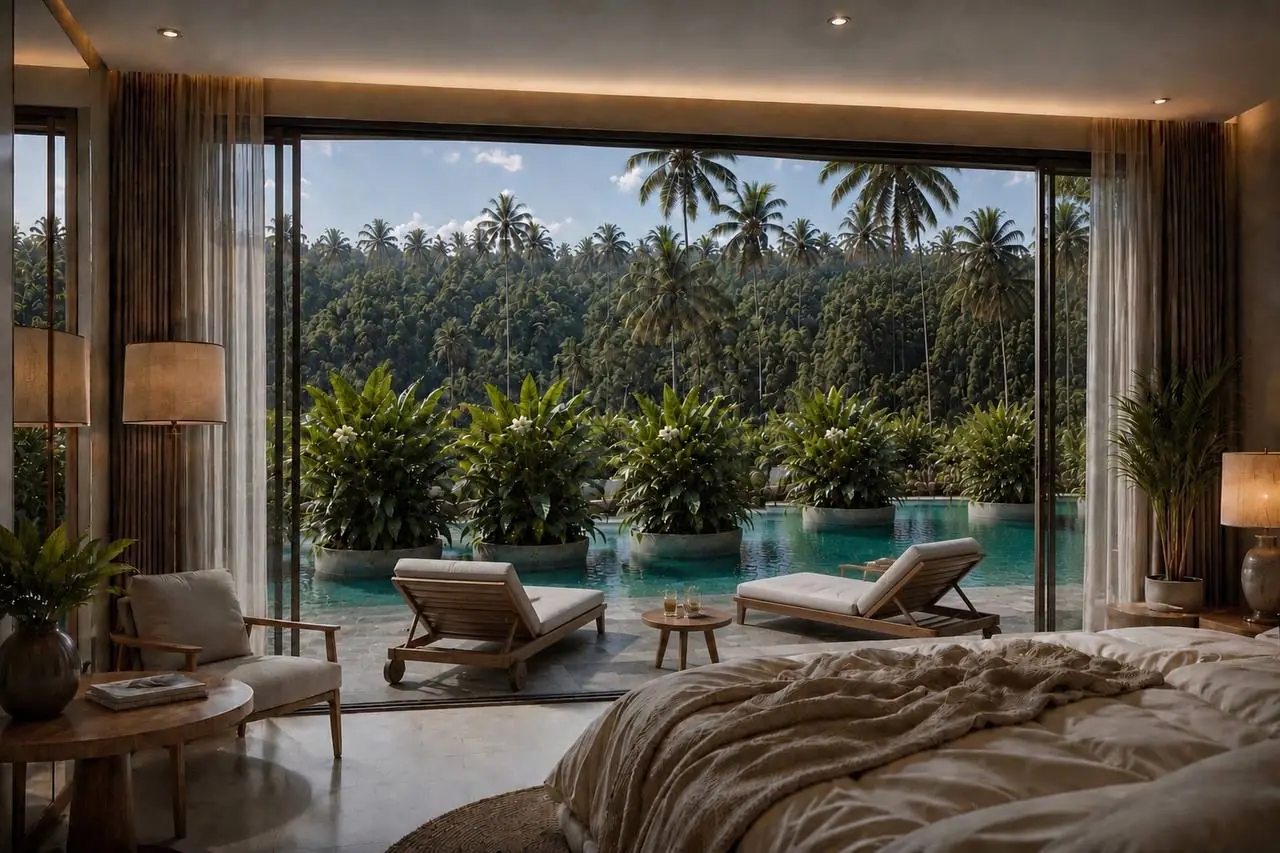
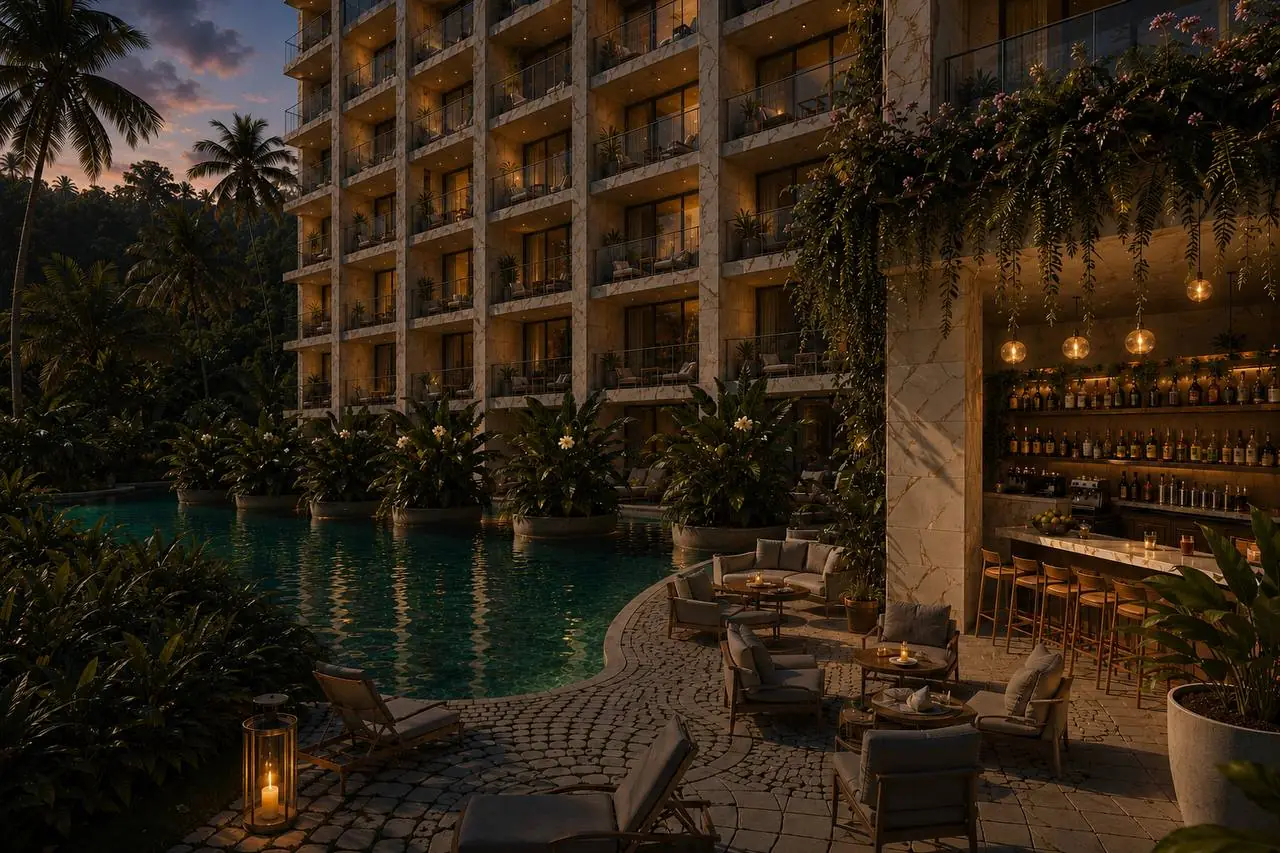
Y Mirissa pool bar at night — render
Market data · formula · scenarios

Sri Lanka rental yield:
market numbers and our calculation

What rentals in the island's south earn in the 4–5-star segment — from hotel and platform data, not advertising. And how income is calculated for an apartment in my project: with the formula and assumptions.

An oceanfront studio at Y Mirissa — $94,900 until 15 December 2026
Benchmarked against 4–5★ hotelsAn open formulaA nightly rate below the marketNo "guaranteed return"Income in US dollars
3–5%long-term letting in Colombogross yield, 2026
50–70%4–5★ hotel occupancyannual average, the best 70%+
~$305a night at 4–5★ boutique hotels9 Mirissa hotels, Booking, incl. taxes
2.36 Mtourists in 2025a record, SLTDA
≈12.5%our base-case projection65% occupancy × $100 — an assumption
49.9%of revenue to the ownerafter costs and tax
What the market says

Rental yield in Sri Lanka depends on the segment: from 3% in Colombo to 4–5★ hotels in the south

Long-term letting in Colombo earns little: gross yields of about 3–4% according to Numbeo and 4–5% according to LankaPropertyWeb's 2026 estimate. Apartments in the capital are expensive and rents have not kept up.

Short-term letting in the south depends heavily on the class of property. Averages across all listings are dragged down by guesthouse rooms and older flats, so we benchmark Y Mirissa only against its own segment — 4–5-star hotels and apartments. They charge $85–245 a night with 50–70% average annual occupancy, and the best resorts, such as John Keells' Cinnamon chain, held above 70% in 2025.

Our calculation is more cautious than the market: $100 a night excluding taxes at 60–65% occupancy. For comparison, 9 boutique 4–5★ hotels in Mirissa within 500 m of the beach average about $305 a night on Booking.com including taxes, and premium Airbnb apartments start at $147 with 47–54% occupancy. In the low season, May to October, we assume 40–45% occupancy, supported by monthly rentals.
Sources: Numbeo, Ada Derana (January 2026), LankaPropertyWeb (February 2026) for Colombo; hotel reports, AirROI and our own Booking.com rate survey (October 2026) for the 4–5★ segment. Booking rates are published prices, not hotels' actual revenue.

The 4–5-star segment

What we benchmark Y Mirissa against

OccupancyNightly rateWhat it is
4–5★ hotels in the south50–70%$85–245annual average; Cinnamon (John Keells) above 70% in 2025
Premium Airbnb apartments47–54%from $147top 25% of listings, Mirissa to Ahangama
9 boutique 4–5★ hotels in Mirissa—~$305Booking.com, double room incl. taxes; high season ~$345, low ~$265
Y Mirissa · our calculation60–65%$100excl. taxes; 40–45% in the low season + monthly rentals

Hotels in the Booking sample: Coastline Boutique & Spa, Asaya Sands, Three Gables, Beach & Bliss, Ubuntu Beach Villas, Sri Sharavi, Saltasia, Villa Océane, The Beach House. Rates for the 15th–18th of each month, October 2026 to September 2027.

What drives income

Why some apartments run at 30% occupancy and others at twice that

1SeasonDecember–April is the peak; in summer long stays carry occupancy
2Formatan apartment with a kitchen and workspace versus a room
3Amenitiesa pool, coworking, a café — guests pay more for them
4Managementreviews, response time, cleanliness — the platform rating
5Own demand channelwith us — Co.Space communities on top of the platforms
6Entry pricethe cheaper the entry, the higher the yield on price
Yuri Goldberg
Who ran the numbers

I am an economist — and I do not like numbers without a formula

My name is Yuri Goldberg. For 20 years I have worked where finance meets residential property, and I am an economist by training. In development it always bothered me that "yield" and "margin" mean different things to different people — I unpicked that in the diary.

So every figure we show comes with its formula and assumptions: occupancy, nightly rate, costs, tax. You do not have to believe our base case — look at the conservative one or plug in your own numbers.

Occupancy is the job of my co-founder Maksim Zaikin: he built the Co.Space community network across 140+ cities — our channel of guests on top of the booking platforms.

Yuri Goldberg, founder of GET-Y

Read the project diary →
Where income comes from

Three sources of income from an apartment by the ocean

Yield is not only rent. But price growth is a scenario, not a promise.

Nightly

season and short trips
the main income

Tourists and short stays, especially December to April.

Monthly

nomads and winter stayers
occupancy in the low season

One- and two-bedroom apartments nearby let for roughly $500–900 a month.

Price growth

by construction stage
a scenario, not a promise

The price of a new development steps up stage by stage; the outcome depends on the market.

Get the financial model
Check for yourself

Y Mirissa: where the project is now

DoneLand acquiredMirissa, 300 m to the ocean
DoneUDA clearance (PPC)preliminary, received
NowDetailed designLevchuk Architects and KWA Architects, Colombo
NextConstruction startApril 2027, planned
NextCompletionDecember 2029, planned

How I ran the project's numbers

The business model, which numbers to watch, why I threw away the first design and what buyers told us.

Our calculation

What a $94,900 studio could earn

The studio price is valid until 15 December 2026. A $3,000 reservation locks the apartment and price and is refunded if you change your mind. Then you pay by construction stage, interest-free.

Payment schedule for a studio

Reservationlocks the apartment and price$3,000
Building permit · 30%30% less the reservation$25,470
Foundation · 20%once the stage is complete$18,980
Structure · 30%once the stage is complete$28,470
Common-area finishing · 10%once the stage is complete$9,490
Title transfer · 10%completion — December 2029$9,490

Prices, the contract and rent are all in US dollars. The exact schedule is set out in the contract.

Get the financial model

Three income scenarios

Revenue = occupancy × nightly rate × 365. Less 42% costs (including the management company's fee), less 14% tax. The owner keeps about 49.9% of revenue.

ScenarioOccupancy · nightIncome a yearReturn on price
Conservative55% · $100≈ $10,010≈ 10.5%
Base65% · $100≈ $11,830≈ 12.5%
Optimistic75% · $100≈ $13,650≈ 14.4%

A $94,900 studio at $100 a night excluding taxes — below 4–5★ hotel rates. Costs of 42%: the management company 30%, building upkeep 7–8%, a capital repair reserve of about 5%. A projection, not a promise.

How not to be fooled

Three questions to ask about any "yield"

1

What is the formula?

Ask which occupancy, nightly rate and costs produced the figure. If there is no formula, it is advertising, not a calculation.

2

What is it compared with?

Compare like with like. For us that means 4–5★ hotels and apartments, not guesthouse rooms: they have different nightly rates and occupancy.

3

What is the bad case?

Look at the conservative case and the low season. If those still work for you, it is a considered decision.

This project is not for you if…

  • you need a guaranteed return — no honest seller can give one;
  • only the optimistic case works for you — look at the conservative one too;
  • you need income right now — completion is in December 2029;
  • you want a long-term city let — this is a resort with short-term rentals.
Questions and answers

Sri Lanka rental yield

What is the rental yield in Sri Lanka?

It depends on the format and class. Long-term letting in Colombo yields about 3–5% gross a year. Short-term letting in the 4–5★ segment in the south earns more: $85–245 a night with 50–70% average annual hotel occupancy.

What is the yield at Y Mirissa?

On our formula for a $94,900 studio: the conservative case is ≈10.5% a year, the base ≈12.5%, the optimistic ≈14.4%. It is a projection, not a promise.

Why benchmark against 4–5★ hotels rather than the average Airbnb?

Y Mirissa will operate as a managed hotel, so its segment is 4–5★ hotels and apartments. Averages across all listings in Mirissa and Weligama — 33–54% occupancy and $43–81 a night — include guesthouse rooms and older flats. Even so, our calculation ($100 excluding taxes) is below the rates of its own segment.

Where does the market data come from?

Long-term letting: Numbeo, Ada Derana and LankaPropertyWeb (2026). The 4–5★ segment: hotel reports, AirROI and our own Booking.com survey of 9 boutique hotels in Mirissa (October 2026). Booking rates are published prices, not actual revenue.

How much goes on costs and tax?

42% of revenue: 30% to the management company (operations, sales, platforms), 7–8% building upkeep and about 5% for a capital repair reserve. Then 14% tax on rent, which is final for non-residents. The owner keeps about 49.9% of revenue.

Why no guaranteed return?

A guarantee is one company's promise, not a feature of the apartment. We show the formula, assumptions and scenarios — all of which you can check.

What happens to income in the low season?

From May to October we assume 40–45% occupancy, carried by long stays — apartments nearby let for roughly $500–900 a month — and our own Co.Space guest channel.

Does the apartment's price grow?

In a new development the price steps up by construction stage: the earlier you enter, the lower the price. The outcome depends on the market — it is a scenario, not a promise.

Can I get the financial model?

Yes. I will send the calculation with the formula and every assumption — you can plug in your own occupancy and nightly rate.

How do I take the income out?

Through an investment account with a licensed Sri Lankan bank (IIA): it gives you the legal right to repatriate rental income and sale proceeds.

Next step

Check the numbers yourself

1I send the financial modelthe formula, assumptions and every scenario — plug in your own numbers.
2We talk for 15–20 minuteswe go through the assumptions and the awkward questions.
3If it fits — a $3,000 reservationit locks the price until 15 December. Change your mind and we refund it.

You write to me personally, Yuri Goldberg. A request commits you to nothing.

Read also
Get the model